
Skin Longevity Science

Your Skin Is a Biomarker of Longevity

Clinically informed skincare formulated to support collagen integrity, cellular renewal, and barrier resilience — reflecting the vitality of your whole system, not merely its surface.

The LLH Edit — Curated by Longevity Life House

Skin Longevity by Mechanism

Each formulation is selected for a distinct biological pathway associated with skin aging. Understanding the mechanism helps you build a precise, layered protocol — grounded in evidence, not guesswork.

Woman in a neutral outfit holding a skincare serum bottle in a bright, modern bathroom.
Collagen Optimization

Pro-Collagen Complex

Formulated to support and help protect the skin's structural matrix.

Mechanism of Action

Combines bioavailable copper peptides (GHK-Cu) with retinol precursors studied for their role in supporting fibroblast activity and collagen I and III production, alongside ingredients associated with reduced collagenase (MMP-1/MMP-3) activity.

Application Protocol

Apply 2–3 drops to cleansed skin each evening. Allow 60 seconds for full absorption before layering a nourishing balm. Pair with internal collagen peptides (10 g daily at breakfast) as part of a broader, consultant-guided approach.

Integration Strategy

Often paired with GHK-Cu peptide supplementation and red-light therapy sessions as part of an individualized protocol. Avoid layering with vitamin C in the same application — reserve vitamin C for morning use.

Expected Results & Timeline

In our clients' experience, early improvements in skin firmness and fine lines are often noted around weeks 6–8, with continued change reported through 12–16 weeks of consistent use. Individual results vary.
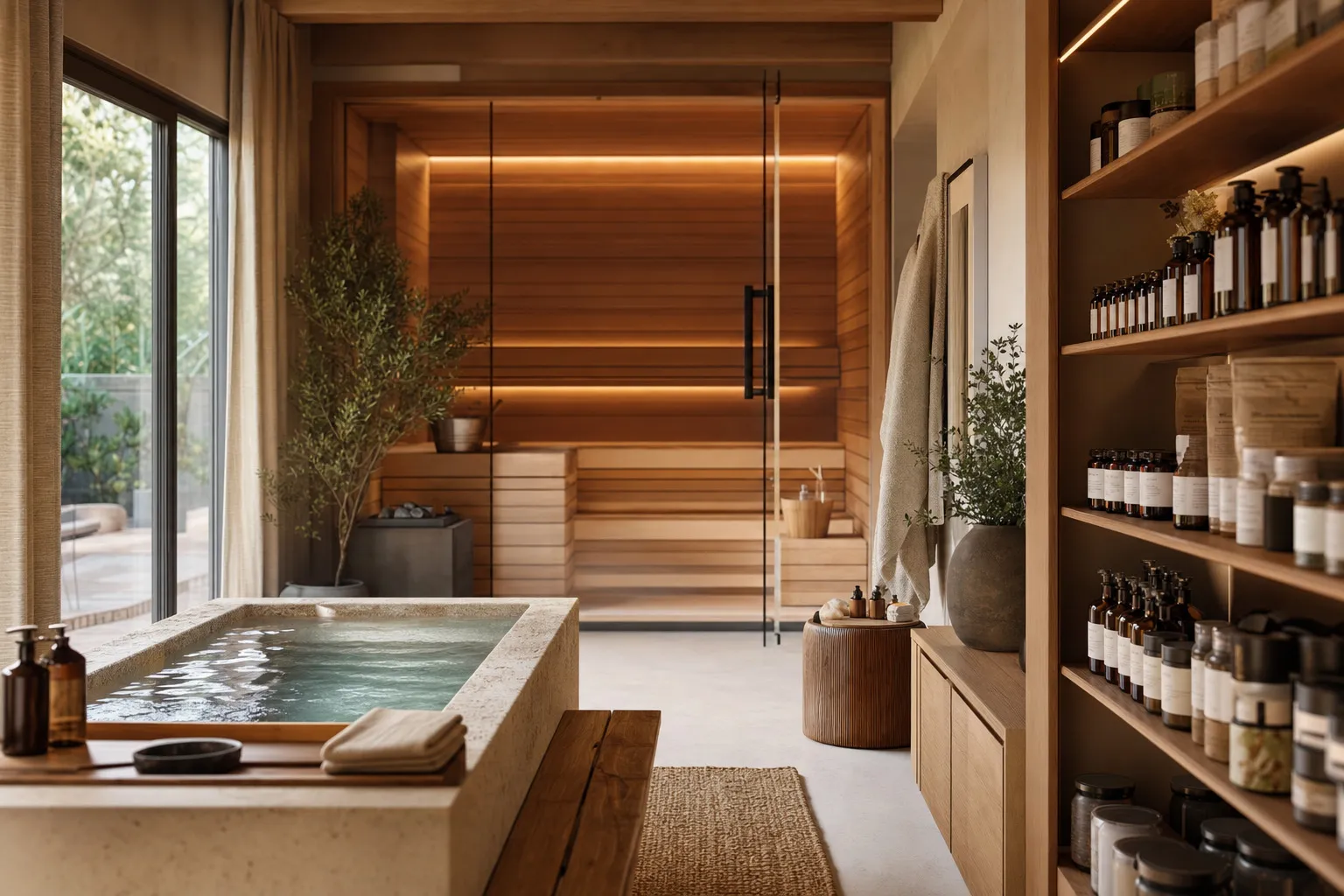

Modern spa bathroom shelf with curated skincare and wellness products.
Skin Barrier Repair

Barrier Restore Concentrate

Formulated to help support the skin's lipid barrier under everyday stress.

Mechanism of Action

A physiological ceramide ratio (ceramide NP, AP, and EOP) combined with beta-glucan and niacinamide is designed to reinforce the stratum corneum and support a healthier transepidermal water loss (TEWL) profile.

Application Protocol

Apply morning and evening to damp skin immediately after cleansing. For visibly compromised barriers (redness, flaking, sensitivity), we typically recommend using it as the sole active treatment for the first 4 weeks before introducing additional actives.

Integration Strategy

Often paired with oral essential fatty acid supplementation (omega-3 and GLA) as part of a broader protocol. Suitable for most skin types; frequently recommended for post-procedure and mature skin.

Expected Results & Timeline

Clients often report reduced sensitivity and improved hydration within 2–3 weeks, with continued improvement reported through 8–12 weeks of consistent use. Individual results vary.

A person in a serene, softly lit room reflecting a calm skincare ritual.
Pigmentation Correction

Luminance Tone Serum

Formulated to help address uneven tone, with a gentle approach.

Mechanism of Action

Alpha-arbutin and tranexamic acid are studied for their role in supporting the tyrosinase and plasminogen activator pathways associated with melanin production. Phytic acid provides mild exfoliation to help clear existing surface pigment, while kojic acid dipalmitate is included to support brightening between applications.

Application Protocol

Apply 3–4 drops each morning to clean skin, focusing on areas of uneven tone. Follow with a broad-spectrum SPF 50+ sunscreen — daily sun protection is essential to supporting these results. For persistent unevenness, an evening application of 0.1% retinal may be considered at week 6, in consultation with your provider.

Integration Strategy

Internally: our consultants may discuss vitamin C, glutathione, and polyphenol-rich antioxidants as part of a broader plan. A hormonal balance assessment is recommended for persistent melasma.

Expected Results & Timeline

Clients often report more even-looking tone within 4–6 weeks, with continued improvement in post-inflammatory pigmentation frequently reported through week 12. Melasma tends to require a longer horizon — often 16–24 weeks — alongside hormonal evaluation. Individual results vary and are not guaranteed.

A person resting in a calm, softly lit room reflecting a restorative skincare ritual.
Anti-Inflammatory Support

Calm & Resilience Serum

Formulated to support skin calmness amid everyday inflammatory stress.

Mechanism of Action

Bisabolol, avenanthramides, and bakuchiol are combined for their studied roles in supporting a calmer inflammatory response and providing a gentler, retinoid-adjacent effect without the irritation often associated with retinoic acid. Designed as part of a broader approach to the inflammatory processes associated with skin aging.

Application Protocol

Apply 2 drops morning and evening as a base serum before other actives. Often recommended during periods of physiological stress, high training loads, or reduced sleep quality.

Integration Strategy

Frequently paired with systemic support such as omega-3 supplementation, curcumin, and PEMF therapy sessions as part of an individualized plan. Avoid combining with exfoliating acids in the same application window.

Expected Results & Timeline

Clients frequently report reduced visible redness and improved skin comfort within 1–2 weeks, with continued improvement often reported through weeks 6–8. Individual results vary.

Curated shelf of skincare and wellness products in a luxury spa bathroom.
Cellular Renewal

Renewal Resurfacing System

Formulated to support cellular turnover for a refreshed appearance.

Mechanism of Action

A calibrated polyhydroxy acid (PHA) and lactic acid blend is designed to gently support surface cell turnover and epidermal renewal. Stabilized vitamin C (20% ascorbyl glucoside) provides antioxidant support during this process.

Application Protocol

Use 3 evenings per week, alternating with recovery nights (barrier repair concentrate). Begin with one application weekly for the first 2 weeks to assess skin tolerance. Do not use on the same evening as retinoids.

Integration Strategy

Often discussed alongside internal NAD+ precursors (NMN or NR) and spermidine supplementation, and frequently paired with red-light and near-infrared therapy as part of a broader, consultant-guided protocol.

Expected Results & Timeline

Clients often note visibly smoother texture and improved radiance around weeks 3–4, with continued improvement in fine lines and light reflectance frequently reported through weeks 8–12. Individual results vary.

Not certain which protocol is right for your skin concerns and goals?

Request a Personalized Skin Protocol
Systems Integration

Skin Health Is Whole-System Health

Topical formulations perform best when supported by systemic foundations. We connect skin longevity to hormone optimization, peptide science, and recovery technology for outcomes that topicals alone cannot achieve.

The Topical Ceiling

Even the most sophisticated topical formulations address the skin's surface biology. When the underlying drivers — hormonal decline, chronic inflammation, nutritional deficits, or disrupted sleep — remain unaddressed, topical results are limited and temporary. We help our clients understand this ceiling and build beyond it.

The Inside-Out Protocol

Our approach integrates targeted topicals with internal support — collagen peptide supplementation, antioxidant loading, hormonal assessment, and recovery technologies including red-light therapy and PEMF. This systemic foundation transforms good results into exceptional, lasting outcomes.

Frequently Asked Questions

Answers to Your Skincare Questions

Informed decisions produce better results. The following addresses the questions we hear most consistently from clients approaching skin longevity for the first time.

Personalized Assessment

Begin With a Skin Longevity Assessment

A precise protocol requires a precise starting point. We evaluate your skin concerns, health history, current regimen, and longevity goals to design a layered topical and systemic strategy specific to you.

Interested in peptide integration? Explore our Peptide Protocols →